 Free AUS Shipping & Returns
Many parents use sound machines to support baby sleep, but choosing a sound can be confusing. You will often see white noise, pink noise, and brown noise listed as separate options, without a clear explanation of what makes them different or why one might feel better than another.
They are simply different sound profiles, which means the same idea (steady background sound) in different tones. Some sound sharper, some softer, and some deeper.
This guide breaks down what each sound is, what it tends to sound like in a real sleep space, and how to choose the best option for your baby and your home setup.
Many babies, infants or toddlers are sensitive to sudden changes in sound, especially during lighter stages of sleep. Even small noises like a door closing, footsteps in the hallway, or dishes in the kitchen can be enough to interrupt settling or wake a baby who has just fallen asleep.
Steady background sound can help soften these disruptions. Instead of silence being interrupted by sudden noise, the sound environment stays more consistent. This reduces the contrast between quiet and loud, making everyday household sounds less noticeable.
For some babies, consistent sound can also become part of the sleep routine. Hearing the same sound each night can signal that it is time to settle and sleep, helping create a familiar and predictable environment.
Sound machines can come with a long list of sleep sounds, but most of them fall into a few familiar types.
The first group is steady background noise, which includes white noise, pink noise, and brown noise. These sounds are designed to play continuously and stay consistent, which helps soften the impact of sudden changes in noise around the house.
The second group is nature based sounds like rainfall, ocean waves, or wind. Many families like these because they feel gentler or more familiar, although they can have more variation in tone and rhythm than steady noise.
Some machines also include newborn style sounds such as womb or heartbeat rhythms, as well as lullabies. These can feel comforting for some babies, especially in the early weeks, but they are not always as consistent as background noise.
All of these sounds can be used as part of a sleep routine, but white noise, pink noise, and brown noise are often compared because they are built specifically to create a steady sound layer. The main difference between them is the tone, which is why one may feel calming in your home while another feels too sharp or too deep.
White noise is a steady sound that plays evenly across all audible frequencies. In simple terms, it creates a consistent background layer that does not rise or fall. White noise sounds like:
It stays constant and predictable, without noticeable changes in volume or tone.
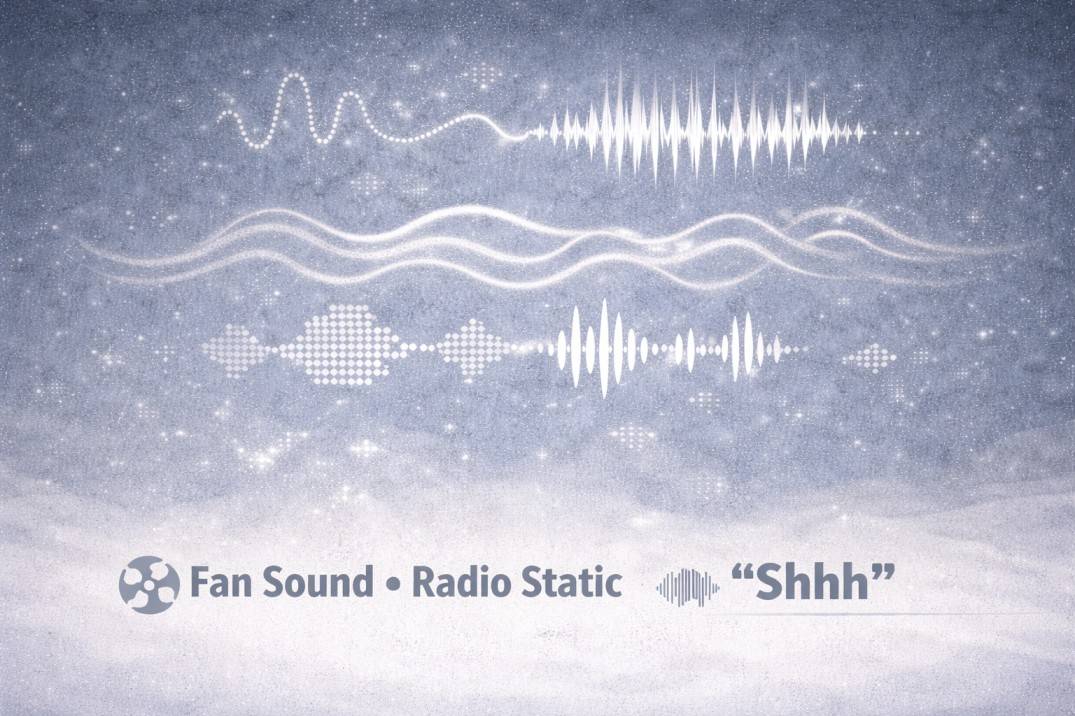
White noise works by masking sudden environmental sounds. Instead of a baby waking when a door slams or dishes clink, the steady sound reduces the contrast between loud and quiet.
Many families use white noise from the newborn stage because babies are used to constant background sound in the womb. It can also be helpful later for infants who wake easily during lighter sleep.
White noise is most commonly used for:
A high quality white noise machine provides continuous playback without noticeable looping, which helps strengthen sleep associations.
Pink noise is similar to white noise, but it reduces higher frequencies and emphasises lower ones. The result feels softer and more natural. Pink noise often sounds like:
Compared to white noise, it tends to feel less sharp and less “hissy” to some listeners.

Some families find pink noise works well when white noise feels too harsh, especially for babies who seem sensitive to sharper tones.
Pink noise may be helpful when:
It can also be worth testing for toddlers who are light sleepers and wake more easily from household sounds.
Brown noise focuses heavily on low frequencies and removes most high tones. It sounds deeper and fuller than both white and pink noise. Brown noise often sounds like:
Because it has fewer sharp, high pitched elements, some families find it feels more grounding in a sleep space, especially if white noise sounds a bit too bright.

Some parents try brown noise when white noise feels too sharp, or when pink noise still does not feel settling. Brown noise is not louder than white noise. It is simply deeper in pitch, which some families find more calming. Families often test brown noise when:
If you have ever tried a sound and thought “that feels too sharp” or “that’s too deep,” you are not imagining it. These sounds are essentially the same tool in different tones.
The video lets you hear the difference between white noise, pink noise, and brown noise, while the comparison table shows how they differ and when each one is commonly used.
Fan noise, soft static, steady “shhh”
Gentle rain, soft wind, smooth “whoosh”
Heavy rain, low thunder, deep “rumble”
Neutral and steady
Softer and smoother
Deeper and fuller
Reduces wake ups caused by sudden noise changes
Less sharp, may feel calmer for sensitive babies
Lower pitch background sound that can feel more soothing
Newborn sleep, nap protection, noisy households
Babies who fuss with “static like” sounds, light sleepers
Toddlers or babies who prefer deeper sound, early wakes
The three sounds work in very similar ways. The main difference is the tone each one creates in the room. For most families, white noise is the easiest place to start. If it feels too sharp, compare white noise, pink noise, and brown noise for baby sleep to see which one your baby settles to best.
If you are unsure which sound to use, the simplest approach is to test them one at a time. Babies and toddlers can respond differently to sound, so the goal is to observe how your child settles over several nights rather than switching sounds too quickly.
Once you find a sound that helps your baby settle comfortably, it is best to keep it consistent. Changing sounds too frequently can weaken the sleep cue that the background sound provides.
When choosing a white noise machine, it helps to look beyond just the sound options. Because not all machines perform the same overnight, the right extra features can make naps, bedtime, and night wakes smoother and more predictable.
The goal is a setup that stays consistent in the background and is easy for you to adjust without disrupting your baby.