Free AUS Shipping & Returns
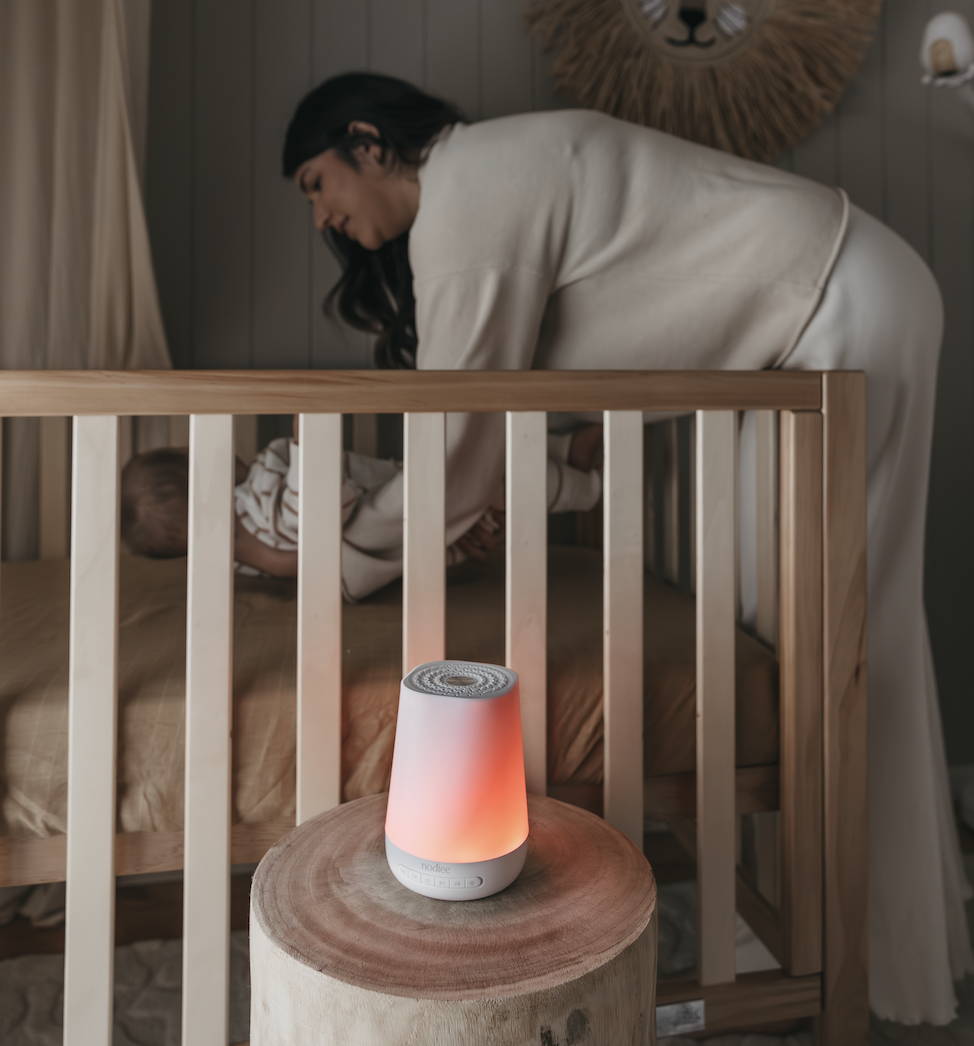
White noise can be a helpful part of bub’s sleep environment, but many parents are unsure exactly when they should turn it on.
Should you start the sound before putting bub in the cot? Should it play during feeds? What about naps and overnight wake-ups?
For most families, the simplest approach is to turn on white noise for baby sleep near the beginning of the wind-down routine, before bub falls asleep.
Using it at a similar point each time can help white noise become a familiar sleep cue rather than something you introduce only when bub is already unsettled.
Try turning on white noise when you begin making the room feel calmer and quieter. This could be when you:
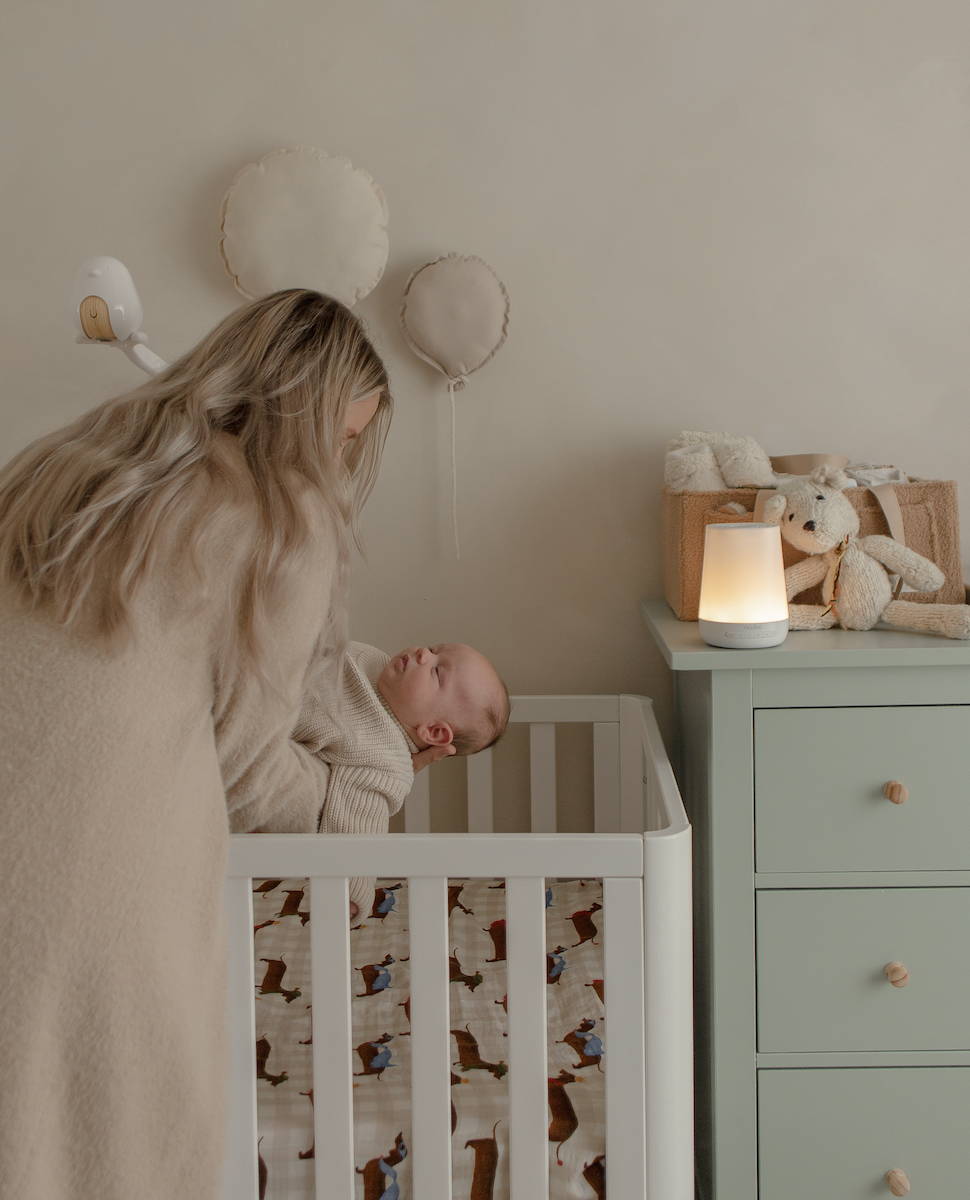
You do not need to wait until bub is already in their sleep space.
Turning the sound on while you are preparing the room, feeding or cuddling can create a smoother transition from awake time to sleep time.
A simple routine might look like this:
Dim the lights → change bub → feed → turn on white noise → cuddle or read → place bub in their safe sleep space
The order can be adjusted to suit your family. A short routine that feels manageable is usually easier to repeat than a long routine with too many steps.
White noise is only one part of the sleep routine. It does not replace responsive settling, feeding or comforting bub when they need you.
Newborn sleep can be unpredictable, so there is no need to wait for a strict bedtime before using white noise.
You can turn it on when your newborn begins showing signs that they are ready to wind down. This might be after a feed, during a cuddle or while you prepare their sleep space.
Keep the sound low and observe how bub responds. Some newborns may find steady background noise soothing, while others may prefer a quieter room or a different sound.
White noise will not stop a hungry baby from waking. Babies can still wake for feeds even when the sound continues overnight.
You can leave white noise playing overnight or turn it back on when you begin resettling bub.
During feeds or nappy changes, keep the room calm and avoid adding unnecessary stimulation. Use a dim light when needed and speak quietly.
If white noise was already playing before bub woke, leaving the sound consistent may be less disruptive than suddenly changing the room’s background noise.
Remember that white noise should never be used to delay responding when bub is hungry, uncomfortable or needs reassurance.
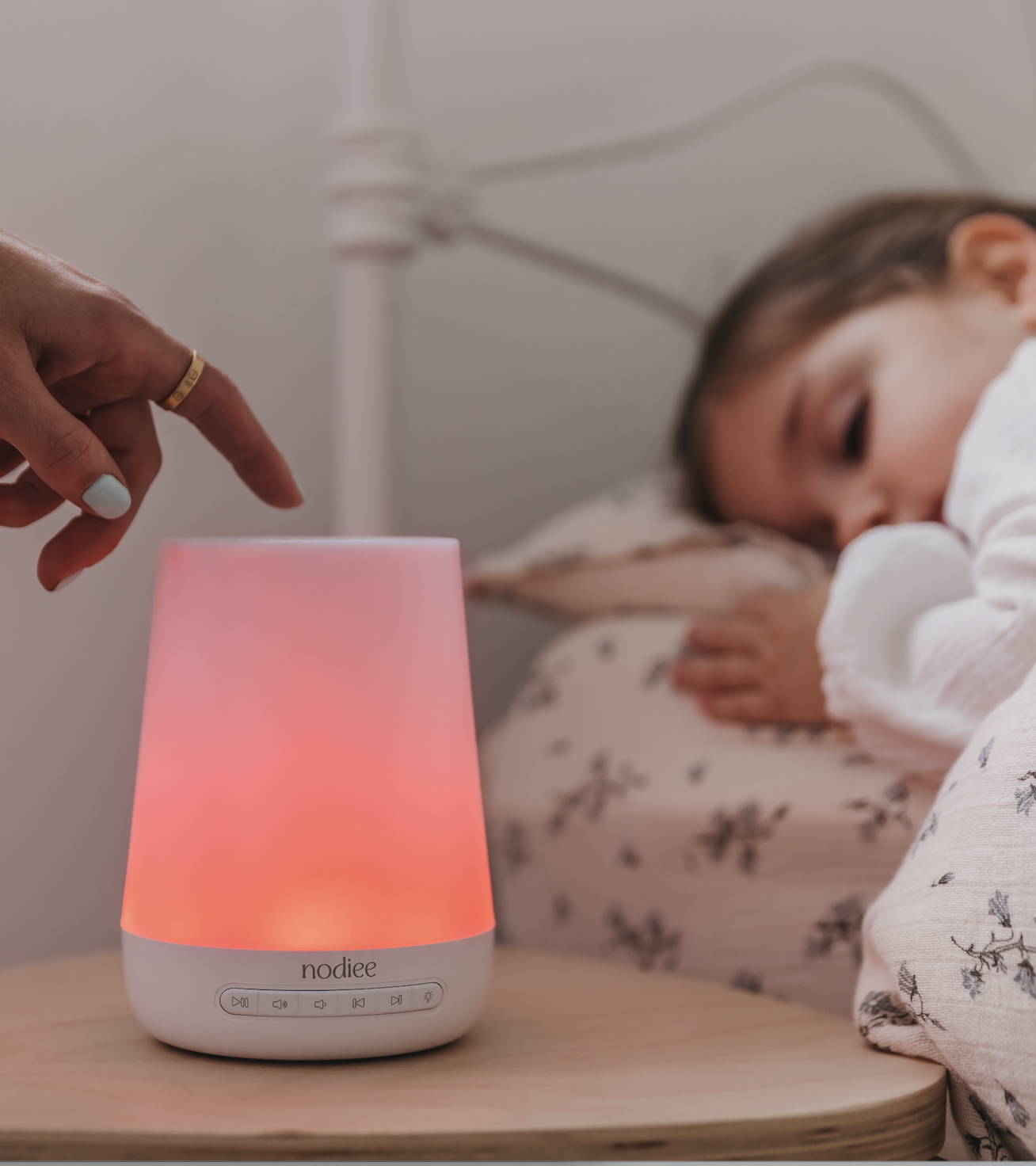
Some parents switch white noise off once bub settles. Others leave it playing during the full nap or overnight.
There is no single routine that will suit every baby.
If bub regularly wakes when the sound suddenly stops, you may prefer to keep it playing at a consistent, comfortable level. You can also use a timer if bub continues sleeping comfortably once the sound finishes.
The goal is not to make the room completely silent. White noise should simply sit in the background and soften sudden changes in sound.
White noise for babies should sit softly in the background. It should not dominate the room or feel loud from where bub is sleeping.
Health professionals generally recommend keeping the volume as low as possible and positioning the sound machine away from bub. Studies examining infant sound machines have found that some devices can reach potentially unsafe sound levels when played loudly or placed too close to the sleep space.
Place the sound machine:
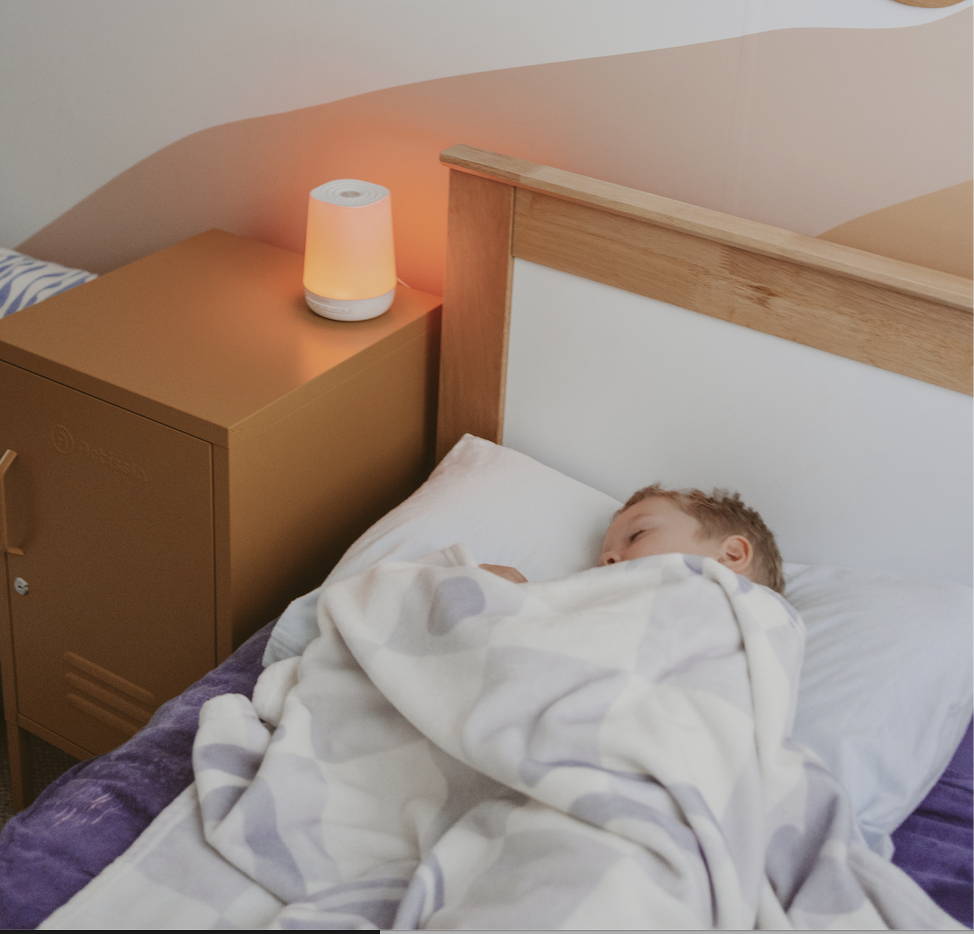
Not every baby responds to the same sound in the same way.
Bub may settle well with traditional white noise, or they might prefer softer pink noise, deeper brown noise, gentle rain sounds or a quieter sleep environment.
Sleep professionals generally recommend paying attention to how bub responds rather than assuming one sound will suit every baby. Choose one sound, keep the volume low and use it consistently for several sleeps before deciding whether it works for your routine.
If bub seems more alert, uncomfortable or unsettled when the sound begins, try lowering the volume, choosing a softer sound or pausing white noise altogether.
White noise can be a helpful sleep cue for some babies, but it is not essential for every sleep routine.
There is no single recommended age when every family needs to introduce white noise.
Sleep professionals generally suggest focusing on how bub responds rather than following a strict starting age. You can begin using white noise when you want to create a calmer, more consistent wind-down routine for naps or bedtime.
For newborns, this might mean turning it on at a low volume after a feed while you begin settling. For older babies, white noise may become part of a more predictable sequence of sleep cues, such as dimming the lights, putting on a sleep sack and preparing the room for sleep.
Start softly, keep the machine away from bub’s sleep space and observe whether the sound helps the room feel calmer. If bub appears uncomfortable or more alert, lower the volume, try another sound or stop using it.