Free AUS Shipping & Returns
Is bub’s room too warm? Will it cool down overnight? Should you add another layer?
A nursery thermometer helps you check the temperature inside your baby’s room before choosing sleepwear. With a humidity monitor included, you can also see how moist the air is, giving you more information about bub’s sleep space.
And while the forecast tells you what’s happening outside, it doesn’t tell you what’s happening beside your baby’s sleep space.
Room conditions can change with the season, your location and your home. Here’s how to use a thermometer, understand humidity readings and pair room checks with a familiar bedtime sound.
Room temperature is one factor to consider when deciding what your baby wears to sleep. A warm room combined with too many layers can leave bub too hot, while cooler conditions may call for different sleepwear.
The temperature on your air conditioner is its setting, rather than a measurement of every part of the room. Sunlight, draughts and the position of heating or cooling vents can all affect the conditions where you place a thermometer.
A digital room thermometer gives you a reading from its location, helping you choose sleepwear with more information. It is useful for noticing changes, but the number alone cannot tell you whether your baby is comfortable.
There is no single room temperature that every healthy baby needs. A reading should guide your choices alongside your baby’s sleepwear and how warm they feel.
Instead of trying to keep the nursery at an exact number, focus on dressing bub appropriately and avoiding overheating. Keep their head and face uncovered, including avoiding hats indoors during sleep.
Check your baby’s tummy or back. These should feel comfortably warm. Cool hands or feet alone do not necessarily mean another layer is needed. If bub feels hot or sweaty, reassess their clothing. If they seem unwell or you suspect a fever, use a suitable body thermometer and seek medical advice.
A room thermometer measures the surrounding air, not your baby’s body temperature.
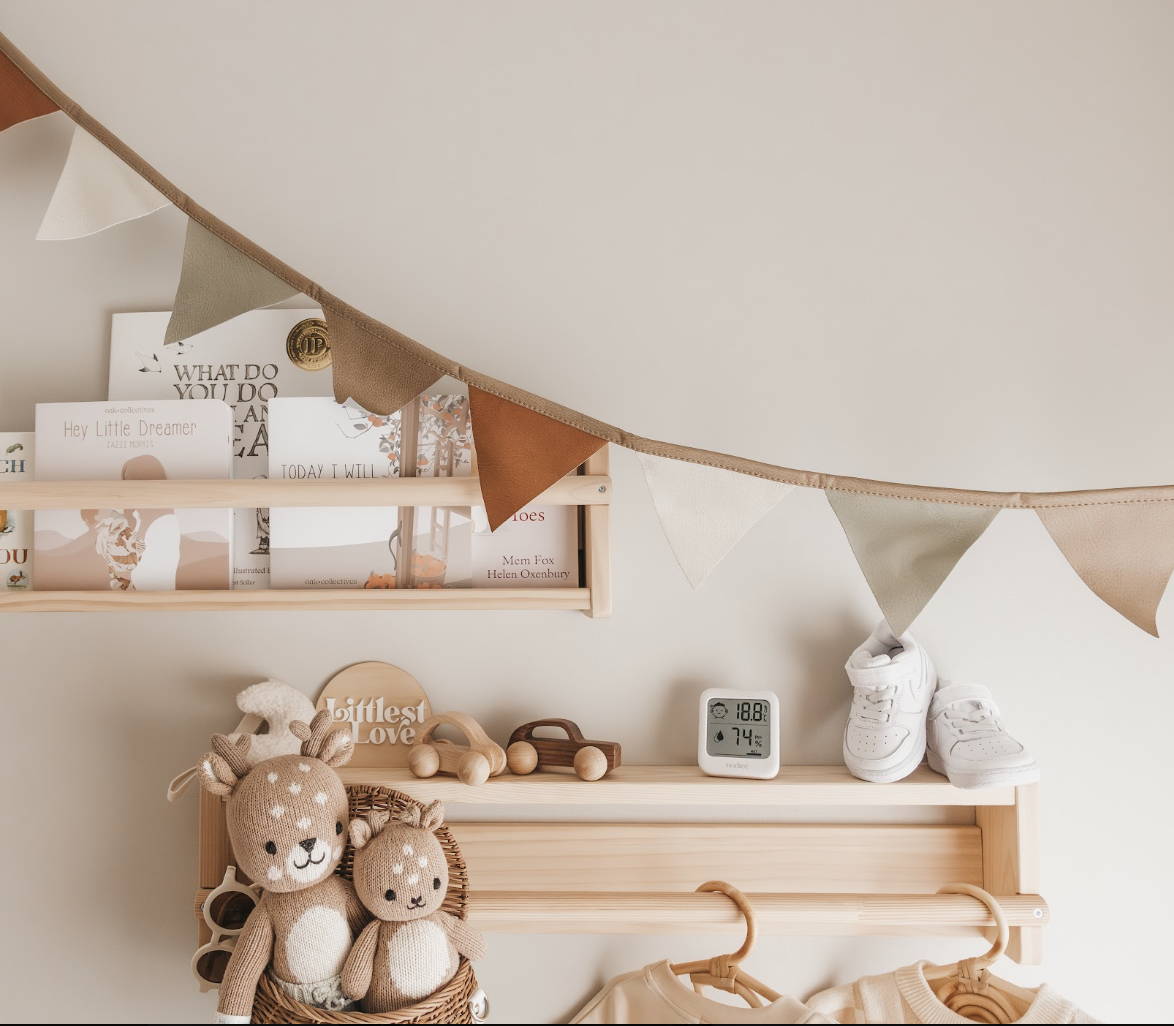
Much of southern Australia experiences four distinct seasons, while the tropical north has wet and dry seasons. Even within the same city, insulation, sunlight and heating or cooling can make bedrooms feel different.
Use the season as context, then check the actual room before deciding what bub wears.
In summer, a nursery exposed to afternoon sun may stay warm into the evening. Check the room again at bedtime rather than relying on a reading from earlier in the day.
Shade sun-facing windows during the day and use suitable cooling if needed. Follow your sleeping bag’s guidance for warmer conditions, and reassess whether bub needs fewer layers. Keep the thermometer away from direct airflow so it measures the room rather than the cool air coming from a vent.
Summer is not equally humid everywhere. Check the humidity reading separately instead of assuming a warm room is also damp.
Autumn can bring warm afternoons followed by cooler evenings, particularly in southern regions. The sleepwear that suited an afternoon nap may need reassessing at bedtime.
Check the bedroom at each sleep period and use the sleeping bag manufacturer’s clothing guide. Avoid adding layers solely because the calendar has changed to autumn.
In cooler parts of Australia, winter bedrooms may cool after heating switches off. Heating can also create warm spots, so keep the thermometer away from heaters.
Use the room reading to choose suitable sleepwear and keep bub’s head uncovered. Check windows and walls for persistent condensation or dampness, and address moisture sources rather than assuming every winter room needs a humidifier.
Spring can alternate between warmer days and cool nights. Recheck conditions rather than using the same sleepwear combination automatically every evening.
If the nursery warms in the afternoon sun, shading may help. On cooler nights, check the room before changing layers. The reading and bub’s comfort are more useful than the season alone.
Places such as Darwin and Cairns have a clearer wet and dry season pattern, with warmth and humidity often important considerations.
During humid periods, opening a window may not reduce indoor moisture if the outdoor air is also humid. Monitor the room, check for ongoing dampness and consider suitable cooling or dehumidification when needed.
During the dry season, continue checking the bedroom rather than assuming it will match southern Australia’s winter conditions.
Humidity is moisture in the air. A monitor usually displays relative humidity as a percentage, labelled RH.
A thermometer answers, “How warm is this room?” A humidity monitor answers, “How moist is the air?”
For example, 22°C and 65% RH are two separate readings. Neither number tells you your baby’s body temperature, and changing one does not necessarily solve an issue with the other.
Relative humidity can also change when air temperature changes, even without adding moisture. This is why it helps to look at both readings together and notice patterns over time.
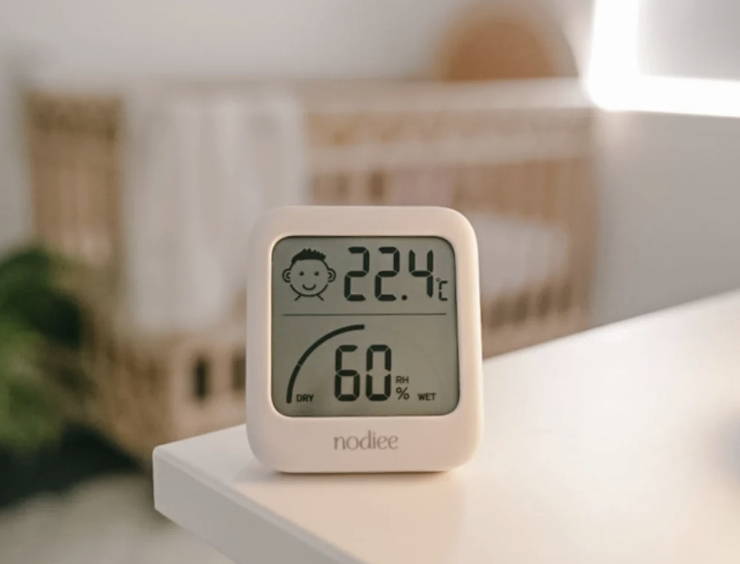
For general indoor moisture control, around 30–50% relative humidity is a useful reference range, with humidity kept below 60% where possible to help discourage mould. This is home moisture guidance, rather than a baby-specific sleep target.
One brief reading outside that range is different from a room that stays damp for days. Look for ongoing patterns and visible signs such as condensation, musty smells or damp patches.
If humidity stays high:
Place it on a stable surface in the room where your baby sleeps, outside the cot and out of reach.
Avoid locations that could skew the reading, including:
Checking before naps and bedtime can help you choose sleepwear. During seasonal changes, an occasional later check while you are already awake may help you understand how the room changes overnight.
You do not need to watch the display continuously. Look for useful patterns, such as a room that warms in afternoon sunlight or cools after the heating switches off.
Small fluctuations are normal. The goal is to understand your home and make sensible adjustments, rather than react to every decimal change.
The Nodiee Digital Room/Nursery Thermometer & Hydrometer displays indoor temperature and humidity together.
It includes Celsius or Fahrenheit readings, a humidity percentage, comfort indicators and a large display. Readings refresh every 10 seconds, and its compact design makes it easy to move between rooms. A tabletop stand and dual magnets offer different placement options.
It runs on one included AAA battery and works without Wi-Fi or an app. Its readings are everyday estimates, so use them to notice conditions and trends rather than treating each decimal as exact.
The monitor measures the room. It does not heat, cool, humidify or dehumidify it.
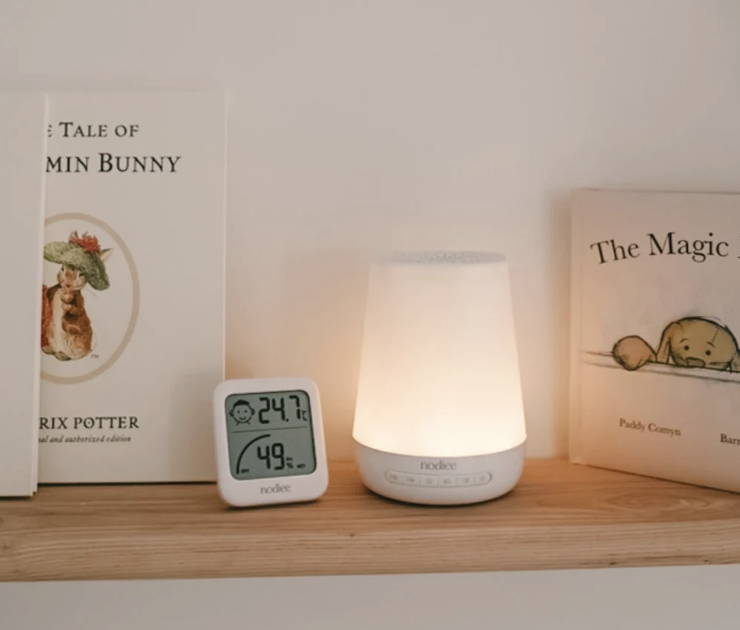
Check the room, then set the scene for bedtime. The Comfort Duo pairs the Nodiee nursery thermometer with the Sleep Assist Smart PRO, bringing temperature, humidity, sound and light into one setup.
Use the thermometer to check room conditions before choosing bub’s sleepwear. Then choose from the Smart PRO’s 34 non-looping sounds and adjust the night light for a gentle wind-down routine. White noise can help soften sudden household sounds, while a dim light provides visibility during settling.
Keep the sound volume low, position the machine well away from bub’s head and outside the cot, and limit playback with a timer or switch it off once they’re asleep. Keep the device and cords out of reach.