 Free AUS Shipping & Returns
The clocks have moved forward, but your bub’s bedtime hasn’t quite caught up.
If your baby seems wide awake at their usual bedtime or your toddler insists it cannot be bedtime because it is still light outside, the time change may be part of the picture.
Daylight saving can temporarily shift the relationship between the clock and your child’s usual sleep rhythm. A few gentle adjustments can help your family find its feet without rebuilding your entire routine.
Your child’s body clock responds to patterns of light and darkness. Changing the clock does not instantly change when they feel sleepy.
When clocks move forward, 7pm on the new clock is the equivalent of 6pm before the change. A child who usually falls asleep at 7pm may initially feel ready for sleep closer to 8pm by the new clock.
You might notice bedtime taking longer, difficulty waking at the usual time, or naps feeling out of step with the day.
Some children barely notice the change. Others need more time. A disrupted evening does not mean your routine has stopped working.
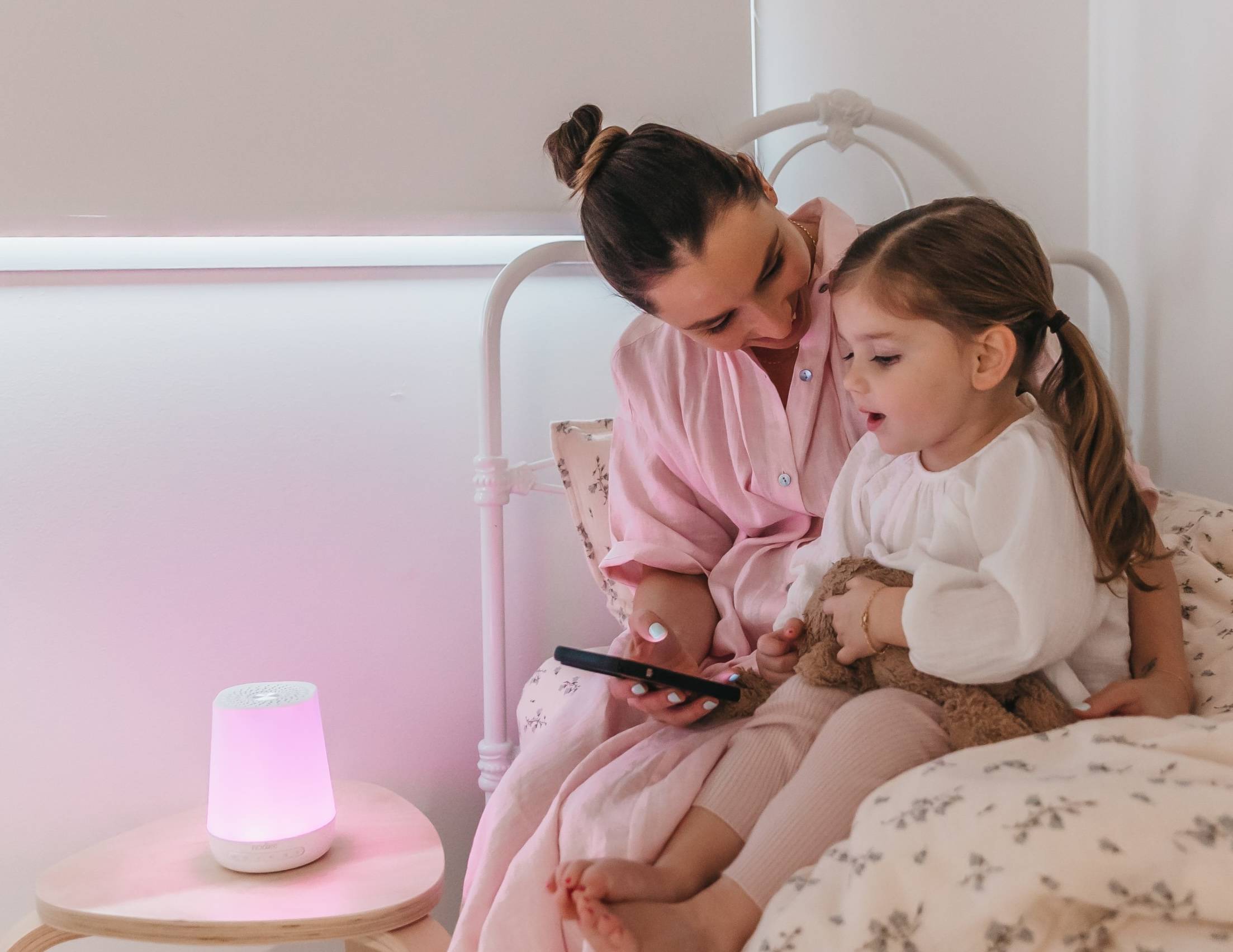
Familiar bedtime sounds and a clear morning cue can be part of your family's routine as the clocks change. The Nodiee Sunrise Alarm combines sleep sounds, a dimmable night light and an Okay-to-Wake cue for toddlers learning when the day begins.
Every baby is different, and baby sleep training is not one-size-fits-all. This guide is designed to help parents understand common sleep training terms, routines and sleep cues.
It is not medical advice and should not replace guidance from your GP, child health nurse or healthcare provider.
At Nodiee, we support Australian families with everyday sleep routine tools like white noise machines, night lights, portable sleep aids and sunrise alarms. We know from parents that bedtime often feels easier when the sleep environment feels calm, familiar and consistent.
Once your child is up for the day, open the curtains and make time for natural morning light.
A sun-safe walk or breakfast near a bright window can become part of your morning routine. Regular light and daily activities help give the body clock signals about when the day starts.
With daylight saving, it may still be bright when your bedtime routine begins.
Close the curtains, lower indoor lighting and choose a quiet activity before bed. You do not need to wait for sunset to begin winding down.
If you need a light for feeds, changes or reassurance, keep it dim rather than lighting up the whole room.
Use the same simple steps your child already recognises, such as pyjamas, a feed, a book, a cuddle and bed.
If you already use a sound machine, keep it within that familiar routine. The goal is a recognisable wind-down, even while the timing changes.
Avoid removing naps simply to try to make bedtime easier. Watch your baby’s usual sleep cues and allow opportunities to rest.
For newborns, feeding and sleep needs take priority over adjusting to a clock-based schedule. Follow their cues and any feeding advice from your health professional.
The direction of the time change matters.
When clocks move forward in October, a usual 6am wake-up becomes 7am by the new clock, if your child’s sleep timing stays the same.
When clocks move back in April, that same wake-up becomes 5am. This is why the end of daylight saving can make early starts feel even earlier.
Babies can wake early at either time of year for other reasons. Consider their wider sleep pattern rather than assuming daylight saving is the only cause.
There is no exact deadline. Some children adjust quickly, while others need several days or longer.
Keep changes gentle and give your child time before deciding whether they help. If sleep difficulties persist or you are concerned about your baby’s feeding, wellbeing or sleep, speak with your child and family health nurse or GP.
You do not need a perfect first night. Start with small timing adjustments, morning daylight and a familiar evening routine.
The Nodiee Sunrise Alarm brings bedtime sound, a dimmable night light and morning cues into one device. Use its features to support the routine that suits your family's stage.
Use a familiar sleep sound during wind-down and keep the night light dim when you need visibility for feeds or changes. For babies, focus on the bedtime features and continue responding to feeding and sleep cues.
For toddlers who are learning a morning routine, set an Okay-to-Wake colour cue through the app. Explain it simply: “When the light turns green, it's morning time.”
Keep responding if your child needs you before the cue. The light is a routine reminder, and learning what it means takes practice.
Sunrise simulation gradually brightens the light before your chosen wake time, offering a gentler way to begin your own morning. Continue making time for natural daylight once you're up.
After the clocks change, check the device time, alarms and app schedules so your cues match the new local time. These features can support familiar routines while your family adjusts; they do not guarantee longer sleep or an instant body-clock reset.